The Perfect Bermuda Grass Mowing Height for a Thick Lawn
If you’ve ever looked at your Bermuda lawn and wondered whether you’re mowing it right, you’re not alone. Getting the lawn mower height wrong with Bermuda grass is one of the fastest ways to damage your turf. So, how short should Bermuda grass be cut?
The ideal mowing height ranges from half an inch to two inches depending on the season, but most homeowners should aim for about one inch during active growth.
Research from university turfgrass programs backs this up. As of 2026, the consensus from extension services at Texas A&M and the University of Georgia puts the sweet spot at one to one and a half inches for common Bermuda varieties. Getting this right makes the difference between a thick, weed-resistant lawn and one that struggles to recover.
Let’s walk through exactly what height to use and why it matters so much.
Image source: Bing (Web (fair-use with source credit))
Why Getting the Right Height Matters More Than You Think
Most people treat mowing height like a simple cosmetic choice. Cut it low for a clean look, right? With Bermuda grass, that thinking can ruin your lawn in a single season.
Bermuda grass is a warm-season turf that grows horizontally through stolons and rhizomes. Those runners store energy and produce new growth. When you cut too short, you slice into those runners.
The plant has to burn stored reserves just to survive. One bad mow sets the lawn back by weeks. A pattern of bad mowing opens the door for weeds, bare patches, and disease.
The stakes are higher than they look. Texas A&M AgriLife Extension research shows that consistent scalping reduces root depth by up to 40 percent. Shallower roots mean less drought tolerance, more watering, and a lawn that browns out faster in summer heat.
On the flip side, leaving Bermuda too long causes its own problems. Tall grass shades the lower runners, encouraging thatch buildup. Humidity gets trapped near the soil surface.
Fungal diseases like large patch and dollar spot flourish in those conditions. A properly mowed lawn at the right height avoids both extremes.
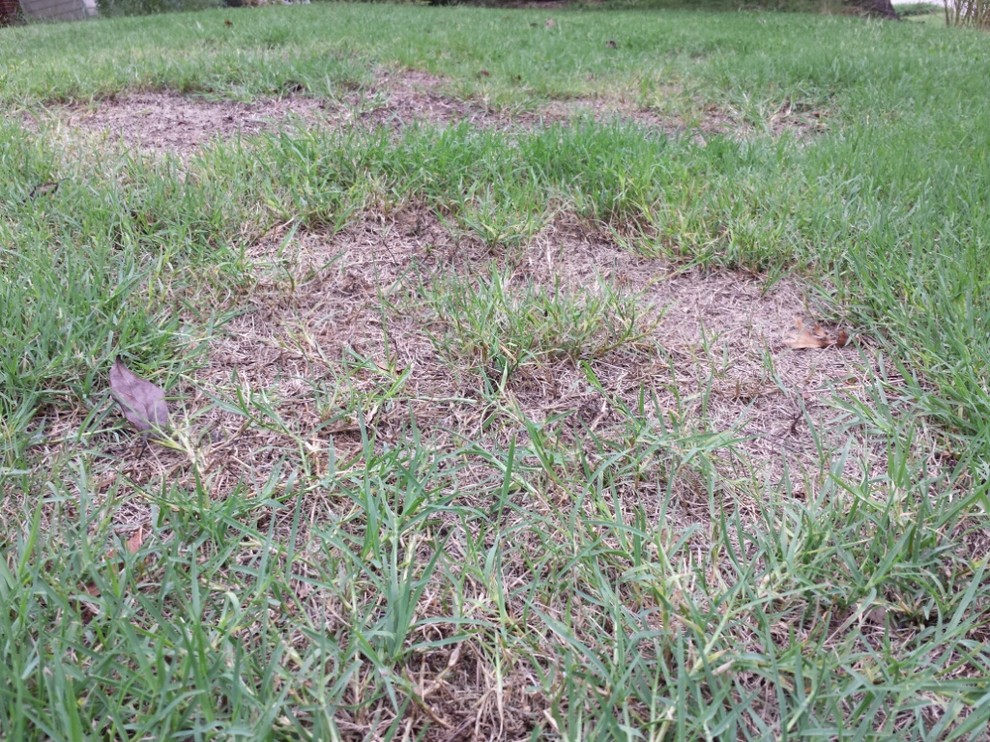
Image source: Bing (Web (fair-use with source credit))
Quick Answer: The Exact Heights for Bermuda Grass
The short answer depends on two things: the time of year and the specific variety in your yard. Here is the breakdown at a glance.
| Season | Recommended Height | Why This Range |
|---|---|---|
| Late spring / summer (peak growth) | 1.0 to 1.5 inches | Encourages dense turf and deep roots |
| Early spring / fall (transition) | 1.5 to 2.0 inches | Protects against temperature swings |
| Winter dormancy | 2.0 to 2.5 inches | Insulates crown and stolons from cold |
These numbers come from published turfgrass management guides from university extension programs. If you have a hybrid Bermuda like Tifway 419 or Celebration, you can lean toward the lower end of the range. Common Bermuda varieties do better at the higher end.
Recommended Summer Height (Growing Season)
During peak growth from late May through August, Bermuda thrives at one to one and a half inches. This is the height that produces the densest canopy. The grass blades shade the soil surface, which suppresses crabgrass and other weed seeds from germinating.
Mowing at this height also forces the plant to allocate energy toward lateral spread. You get a thicker, more uniform lawn that handles foot traffic better. Mow every three to five days during this period.
Never clip off more than one third of the blade in a single pass.
Spring and Fall Height (Transition Periods)
When temperatures start climbing in early spring, raise the mower deck to one and a half to two inches. The grass is waking up from dormancy and needs more leaf surface for photosynthesis. Cutting it short too early stresses the plant and delays green-up.
The same logic applies in early fall. As night temperatures drop below 65 degrees Fahrenheit, Bermuda grass slows down its growth. Leave it at one and a half to two inches heading into dormancy.
This extra height protects the crown during cold snaps and helps the lawn survive winter.
Winter Dormancy Height
Once the grass goes fully brown and stops growing, raise the deck to two to two and a half inches. Do not scalp Bermuda in winter thinking you are preventing disease. That practice exposes the soil to freeze damage and dries out the stolons.
If you live in a mild winter climate where the grass stays partially green, you can keep mowing at two inches. Just reduce frequency. One mow every two to three weeks is enough during the cool season.
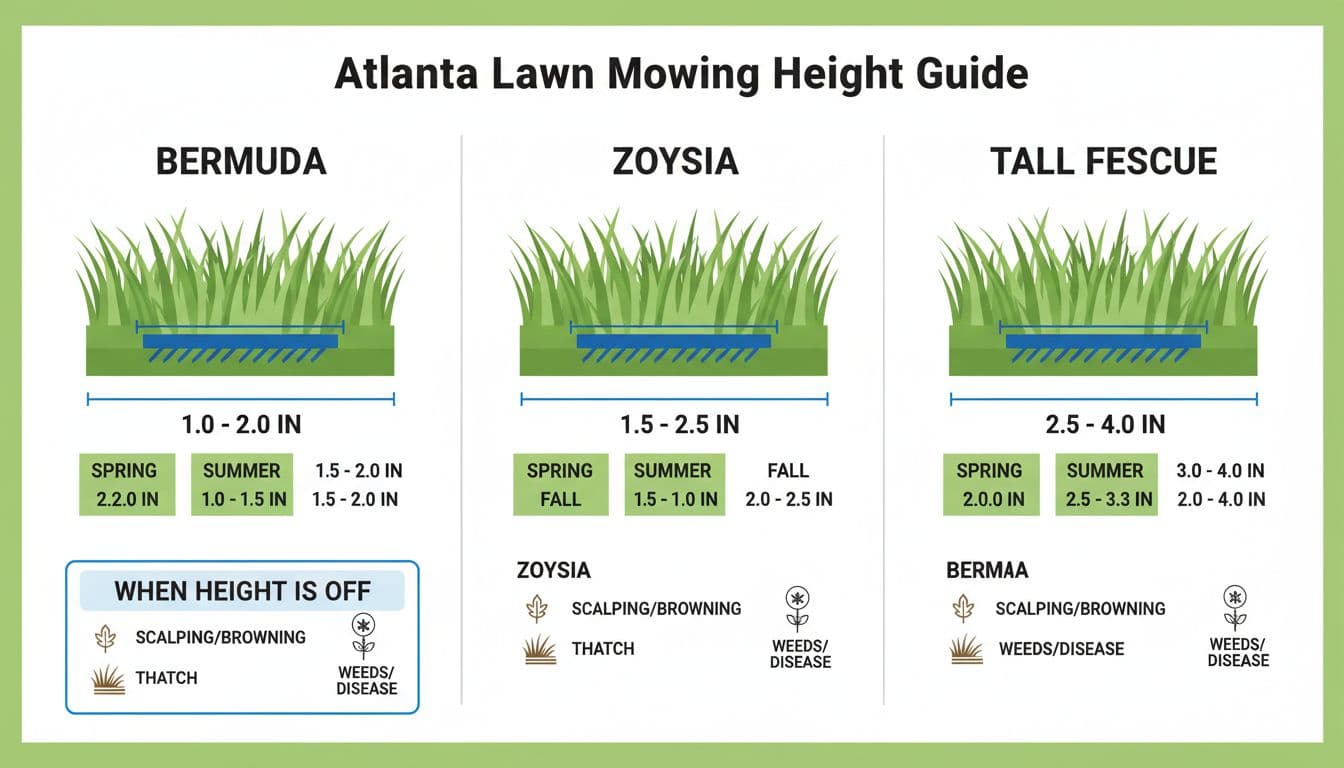
Image source: Bing (Web (fair-use with source credit))
The Science Behind the Numbers: How Height Affects Your Lawn
Mowing height is not a random number someone made up. It is tied directly to how the grass plant functions. Understanding this makes you a better lawn manager.
Why Too Short Kills Roots
Every blade of grass is a solar panel. When you cut the leaf short, you reduce the surface area available for photosynthesis. The plant responds by pulling energy from its root system.
Over time, the roots shorten and thin out.
University of Georgia turfgrass research demonstrates a direct correlation between mowing height and root depth. Bermuda mowed at half an inch develops roots roughly four to six inches deep. Bermuda mowed at one and a half inches can push roots down to ten or twelve inches.
Deeper roots mean the lawn can access moisture lower in the soil profile.
That matters during a drought spell. A lawn with six inch roots dries out fast. A lawn with twelve inch roots keeps growing green for days longer without irrigation.
Why Too Long Invites Weeds and Disease
Here is the other end of the spectrum. Letting Bermuda grass grow to two and a half inches or higher creates a dense, humid microclimate near the soil line. Warm season turf diseases thrive in those conditions.
Tall Bermuda also develops a heavy thatch layer. Thatch is the layer of dead stems and runners that builds up between the soil and the green growth. When thatch gets thicker than half an inch, water and fertilizer have trouble penetrating.
The root zone stays dry even when the surface looks damp.
Weeds love this environment. Tall grass opens gaps in the canopy where light reaches the soil surface. Crabgrass, goosegrass, and sedges germinate in those gaps.
A tightly mowed Bermuda lawn at the correct height shades out most weed competition naturally.
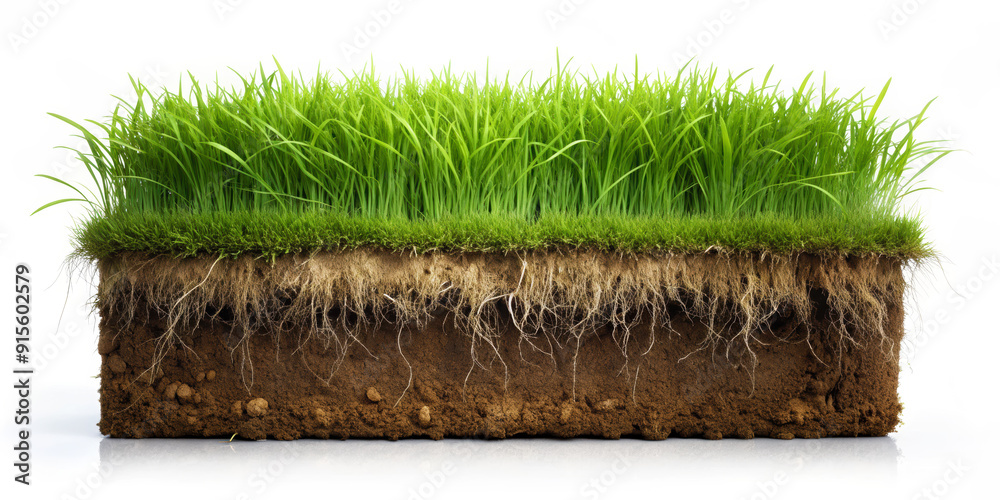
Image source: Bing (Web (fair-use with source credit))
The Two Biggest Mistakes Homeowners Make
After reading forums and talking with extension agents, two errors come up over and over. Avoiding these will save you a full season of lawn recovery work.
Mistake #1: Scalping in Spring Too Early
Scalping means cutting the grass so low that you see bare soil and cut into the stolons. Some people do this intentionally in early spring, thinking it jump-starts green-up. It does not.
It stresses an already weak plant.
The right time for a low spring cut is after the lawn has shown at least fifty percent green growth. That usually happens when soil temperatures reach 65 degrees Fahrenheit at a four inch depth. Before that point, the grass cannot recover from a low cut.
When you scalp too early, you expose the stolons to late frost. Those runners turn brown and die. The lawn fills in with weeds while it struggles to regrow.
A safer approach is the step-down method we cover in the next section.
Mistake #2: Cutting at the Same Height Year-Round
Bermuda grass is not a set-it-and-forget-it lawn. It needs height adjustments across the seasons. Running the mower deck at the same setting from April through November is a recipe for problems.
Low summer height works because the sun is intense and the grass grows fast. That same low height in fall leaves the lawn vulnerable to cold damage. High winter height works for protection but creates a shaggy, weed-prone lawn in summer.
The fix is simple. Adjust the deck three times per year. Spring transition, summer peak, and fall transition.
Each adjustment takes about five minutes and pays off all season.
Keeping your mower in good shape makes those height adjustments more effective. Dull blades tear the grass instead of cutting it clean, leaving ragged tips that turn brown. Routine upkeep with sharp tools ensures every pass does what it should.
The same principle applies to any mower you run, whether it is a walk-behind or a larger machine designed for bigger properties.
How to Safely Change Your Mowing Height
Dropping the deck by an inch overnight is a shock to the grass. The plant cannot adjust that fast. A gradual approach prevents damage and keeps the lawn looking good through the transition.
The Step-Down Method for Spring
In early spring, when the lawn shows consistent green growth, begin lowering the deck one notch at a time. Reduce the height by about one quarter inch per mowing session. That translates to roughly two or three mows to reach your summer target.
For example, if you winter mowed at two inches, your sequence looks like this:
- Mow one: one and three quarter inches
- Mow two: one and a half inches
- Mow three: one and a quarter inches
- Mow four: one inch
Each step gives the grass time to adjust its leaf area and root system. By the time summer heat hits, the lawn is settled into the lower height without going into shock.
The Step-Up Method for Fall
Raising the height in early fall follows the same logic. Start when nighttime temperatures dip below 70 degrees Fahrenheit. Raise the deck by one quarter inch per mow until you reach your winter target of two to two and a half inches.
This gradual process allows the grass to build up carbohydrate reserves before dormancy. The extra leaf surface drives photosynthesis during the shortening days. Come spring, the lawn has stored enough energy to green up faster.
Tools That Make It Easier (Reel vs. Rotary Mowers)
Your equipment matters more than you might think. Most residential lawns use rotary mowers with a single spinning blade. These work fine for Bermuda at one to one and a half inches, provided the blade is sharp.
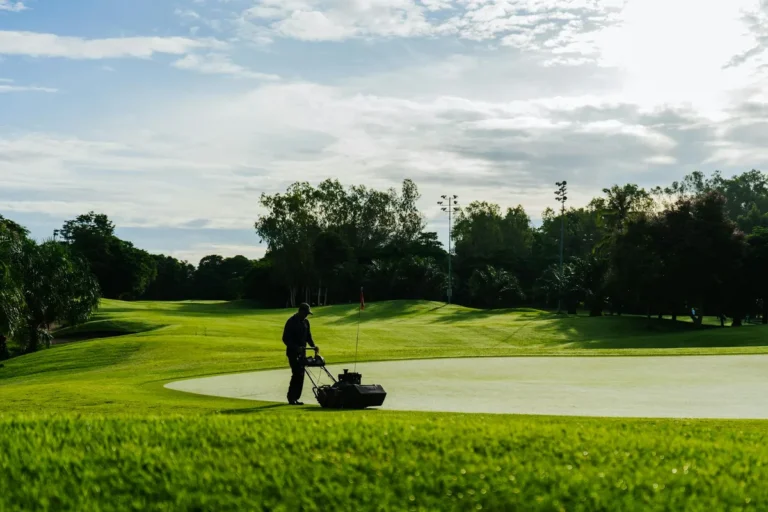
Reel mowers offer a cleaner cut at lower heights. They use a rotating cylinder that shears the grass against a bed knife, like scissors. This produces a precise cut that reduces tip browning and disease entry points.
If you run a hybrid Bermuda at half to three quarters of an inch, a reel mower is the better tool.
For most homeowners, a quality rotary mower with a sharp blade handles the job. Keeping everything running smoothly across the mowing season comes down to consistent maintenance and the right height for each month of the year.
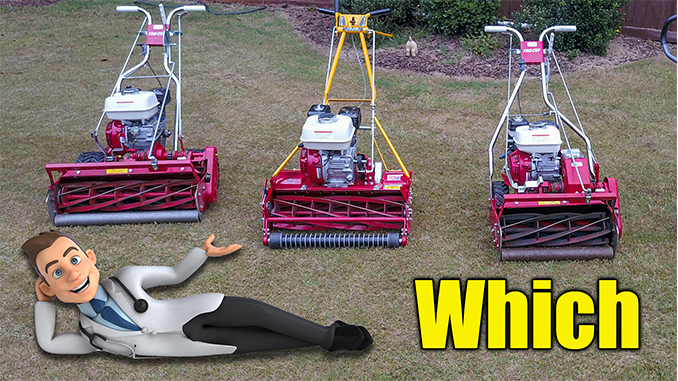
Image source: Bing (Web (fair-use with source credit))
Rotary mowers are more forgiving on uneven ground and easier to find at local stores. Reel mowers require flatter terrain and more frequent sharpening. If your lawn has bumps or dips, stick with a rotary.
If you want that putting-green look and have a level yard, consider switching to a reel model.
Whichever type you use, check the deck level regularly. An unlevel deck cuts one side shorter than the other. That creates a scalped strip on one pass and a missed strip on the next.
Leveling the deck takes a wrench and five minutes. The improved cut quality is worth the effort.
Common Bermuda vs. Hybrid Bermuda: Does the Variety Matter?
If you planted common Bermuda from seed, your mowing rules are different from someone with a hybrid sod lawn. The variety changes how low you can safely cut.
Common Bermuda grows more upright with thicker stems. It needs the extra leaf surface to photosynthesize efficiently. The University of Florida turfgrass program recommends keeping common Bermuda at one and a half to two inches during summer.
Going lower than one inch stresses the plant and invites weed invasion.
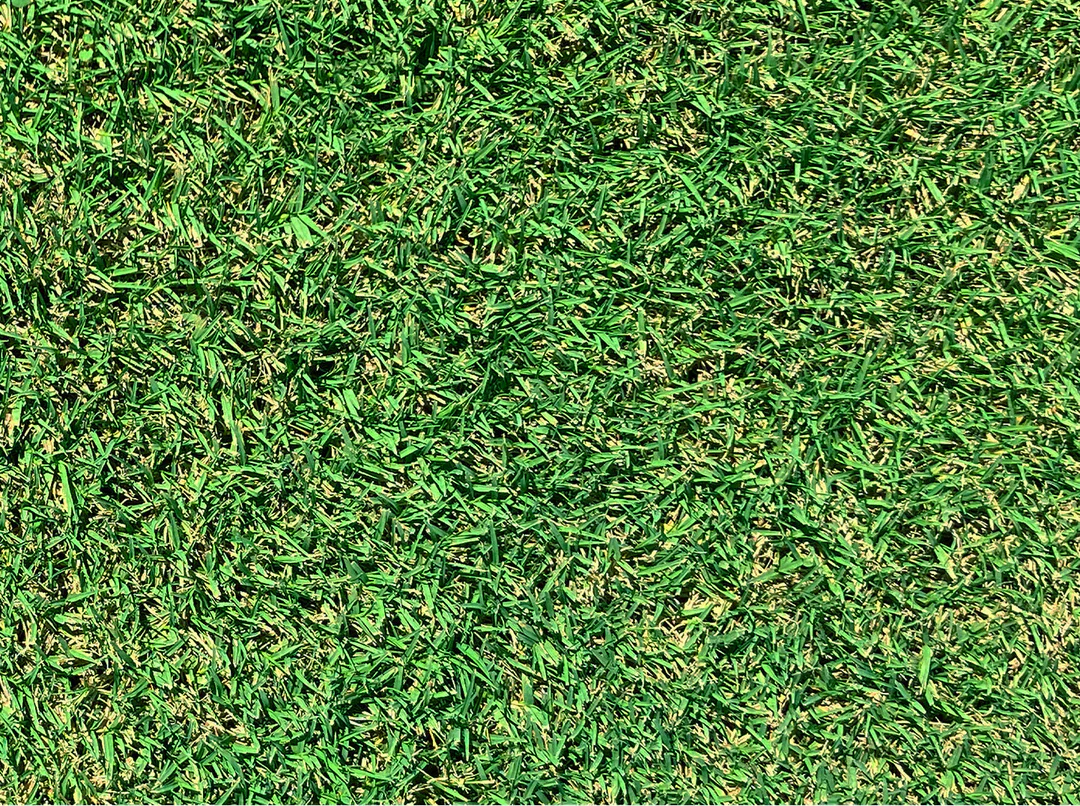
Image source: Bing (Web (fair-use with source credit))
Hybrid varieties like Tifway 419, Celebration, and TifGrand tolerate much lower cuts. These are bred for dense lateral growth and fine leaf texture. Most hybrids perform well at three quarters to one inch.
Dedicated lawn enthusiasts with reel mowers can push down to half an inch.
The trade-off is maintenance. Hybrids need more frequent mowing, higher fertilizer inputs, and closer attention to watering. Common Bermuda is more forgiving.
It handles neglect better and recovers from mistakes faster.
If you do not know what you have, look at the leaf blade width. Common Bermuda has wider blades, about an eighth of an inch across. Hybrids have finer blades, closer to a sixteenth of an inch.
Also look at growth habit. Common Bermuda shoots up vertically. Hybrids spread horizontally with tight nodes.
Knowing your variety saves you from guessing the right height. Check your soil test results and the correct fluid level in your mower before each season starts. Sharp blades and proper lubrication keep the cut clean regardless of the variety.
What About High-Traffic Lawns or Pets?
Kids, dogs, and frequent foot traffic change the equation. High-traffic areas need slightly different mowing strategies.
Keep the height at the upper end of the summer range, around one and a half inches. The extra leaf surface provides cushioning for foot traffic. It also helps the grass recover from trampling more quickly.
Low cut Bermuda bruises easily under heavy use.
If you have dogs, pay attention to urine spots. Female dog urine contains high nitrogen concentrations that burn the grass. Cutting shorter exposes the soil and makes the burn spots more visible.
A taller lawn hides the damage better while the grass recovers.
Bermuda grass is one of the most traffic-tolerant turf species available. It recovers from wear faster than fescue or zoysia. The backpack sprayer you use for lawn care applications can help spot-treat urine burns with extra water to dilute the nitrogen.
For play areas where kids run constantly, consider raising the height to two inches during the busiest months. The lawn will not look as manicured, but it will survive the abuse. Once traffic dies down in late summer, you can drop back to one inch for the remaining growing weeks.
How Drought and Heat Affect Your Cutting Height
Summer heat stress and water restrictions require height adjustments. This is where many people get tripped up.
During a drought, raise the mowing deck by half an inch. A taller canopy shades the soil surface and slows evaporation. University of Georgia research shows that Bermuda mowed at one and a half inches during drought uses 20 percent less water than grass mowed at half an inch.
The reason is simple. Taller grass develops deeper roots. Those deep roots access moisture that shallow roots cannot reach.
If you scalp during a dry spell, the root system shrinks. The lawn goes dormant faster and takes longer to green up when rain returns.
Do the opposite if you have irrigation. Well-watered Bermuda can handle lower cuts because moisture is not a limiting factor. Just stay within the general summer guidelines.
Pushing below half an inch still risks scalping and stolon damage.
A practical example from the 2023 Texas drought: homeowners who kept Bermuda at one and a half inches through July maintained green coverage 12 days longer than neighbors who mowed at half an inch. That difference saves a lot of water bills and brown lawn anxiety.
If local water restrictions limit you to once or twice per week, leave the grass longer. The extra height buys you time between cycles. A handheld sprayer for garden spot watering can keep high-traffic areas alive without wasting water on the whole lawn.
Signs You're Cutting at the Wrong Height
Your lawn sends clear signals when the height is off. Learn to read them.
Scalping symptoms. You see brown or yellow patches that look like someone shaved the grass down to bare soil. The stolons are exposed and turning white or tan. Weeds pop up in those bare spots within two weeks.
Shallow roots. You can pull up chunks of sod easily with a gentle tug. The grass feels loose and spongy underfoot. This means the roots are too short to anchor the plant.
Excessive thatch. A buildup of dead organic matter thicker than half an inch indicates the grass is growing too tall between cuts. The lower stems die off and accumulate faster than they decompose.
Disease pressure. Circular patches of brown or tan grass that expand outward are a sign of fungal infections. Large patch and dollar spot thrive in tall, humid Bermuda. Lowering the height improves air circulation.
Weed invasion. If crabgrass, goosegrass, or clover are overtaking the lawn, the canopy is too thin. Correct height creates dense shade that blocks weed germination.
Uneven color. Stripes of dark green next to lighter green indicate an unlevel deck. One side is cutting lower than the other. Level the deck and the color evens out.
When you see any of these signs, adjust the height gradually. Do not drop more than one quarter inch per mow. The lawn needs time to adapt.
Sample Mowing Schedule for a Full Year
Here is what a healthy mowing rhythm looks like across twelve months. Adjust the dates by two to three weeks depending on your local climate zone.
| Month | Mowing Height | Frequency | Notes |
|---|---|---|---|
| March | 2.0 inches | Every 10–14 days | Start step-down when 50% green |
| April | 1.5 inches | Every 7–10 days | Lower ¼ inch per mow |
| May | 1.0–1.25 inches | Every 5–7 days | Full summer height by Memorial Day |
| June | 1.0 inch | Every 4–5 days | Peak growth, sharpen blade monthly |
| July | 1.0 inch | Every 4–5 days | Raise ½ inch during heat waves |
| August | 1.0–1.5 inches | Every 5–7 days | Ease off if drought stress shows |
| September | 1.5 inches | Every 7–10 days | Begin step-up after Labor Day |
| October | 2.0 inches | Every 10–14 days | Stop fertilizing after first frost |
| November | 2.0 inches | Every 14–21 days | Mow only if grass still green |
| December–February | 2.0–2.5 inches | Monthly or none | Leave alone through dormancy |
This schedule assumes a common Bermuda lawn in the transition zone. If you have hybrid Bermuda, move the summer height down to three quarters of an inch. If you live in the Deep South, your growing season starts two weeks earlier and ends two weeks later.
The key takeaway is variability. Bermuda grass demands different treatment every month. Set a calendar reminder on your phone for the first of each month to check the deck height.
That five minute habit prevents the most common mistakes.
When to Call a Local Expert or Extension Office
Most Bermuda grass problems are fixable with adjustments in height, water, or fertilizer. But some situations need a trained eye.
If you see irregular patches that spread despite correct mowing, it might be a fungal disease like large patch or spring dead spot. A county extension agent can diagnose the issue and recommend a targeted fungicide. They also offer soil testing that reveals pH and nutrient imbalances.
Call an expert when scalping damage does not recover after three weeks of good weather. The stolons may be dead, requiring sod replacement or a full renovation. Extension offices typically charge a small fee for soil tests and provide customized recommendations for your specific Bermuda variety and local climate.
Final Take: The One Number to Remember
If you forget everything else, remember this. During peak summer growth, keep your Bermuda grass at one inch if it is a hybrid, or one and a half inches if it is common Bermuda. Adjust up by half an inch in spring and fall.
Never cut more than one third of the blade in a single mow.
Stick with that rule and your lawn stays thick, green, and resilient. The right height is the single most important factor in Bermuda grass health. Everything else is secondary.
Frequently Asked Questions
Can I cut Bermuda grass at half an inch?
Yes, but only for hybrid varieties with a reel mower on flat ground. Common Bermuda at half an inch will stress and thin out. Half inch cuts also require mowing every two to three days during peak growth.
Should I scalp Bermuda grass in the spring?
No. Scalping before the lawn is actively growing damages the stolons and delays green-up. Wait until the grass shows at least 50 percent green growth and soil temperatures reach 65 degrees Fahrenheit.
How often should I mow Bermuda grass in summer?
Every four to five days is ideal during peak summer growth. Mowing less frequently forces you to cut more than one third of the blade, which stresses the plant. Frequent light trims keep the lawn dense.
Does the mower blade type matter for Bermuda grass?
Yes. Sharp rotary blades work fine for one inch cuts. For cuts below three quarters of an inch, a reel mower provides a cleaner scissor cut that reduces disease and tip browning.
What happens if I cut Bermuda grass too short?
You scalp the stolons, which turns the lawn brown and creates bare spots. Weeds fill in those spots quickly. Recovery takes two to four weeks under good growing conditions.
Can I mow Bermuda grass at the same height year-round?
No. Bermuda needs seasonal height adjustments. Low summer height and higher winter height are both critical for plant health.
Set calendar reminders to adjust the deck three times per year.